
sMS-500
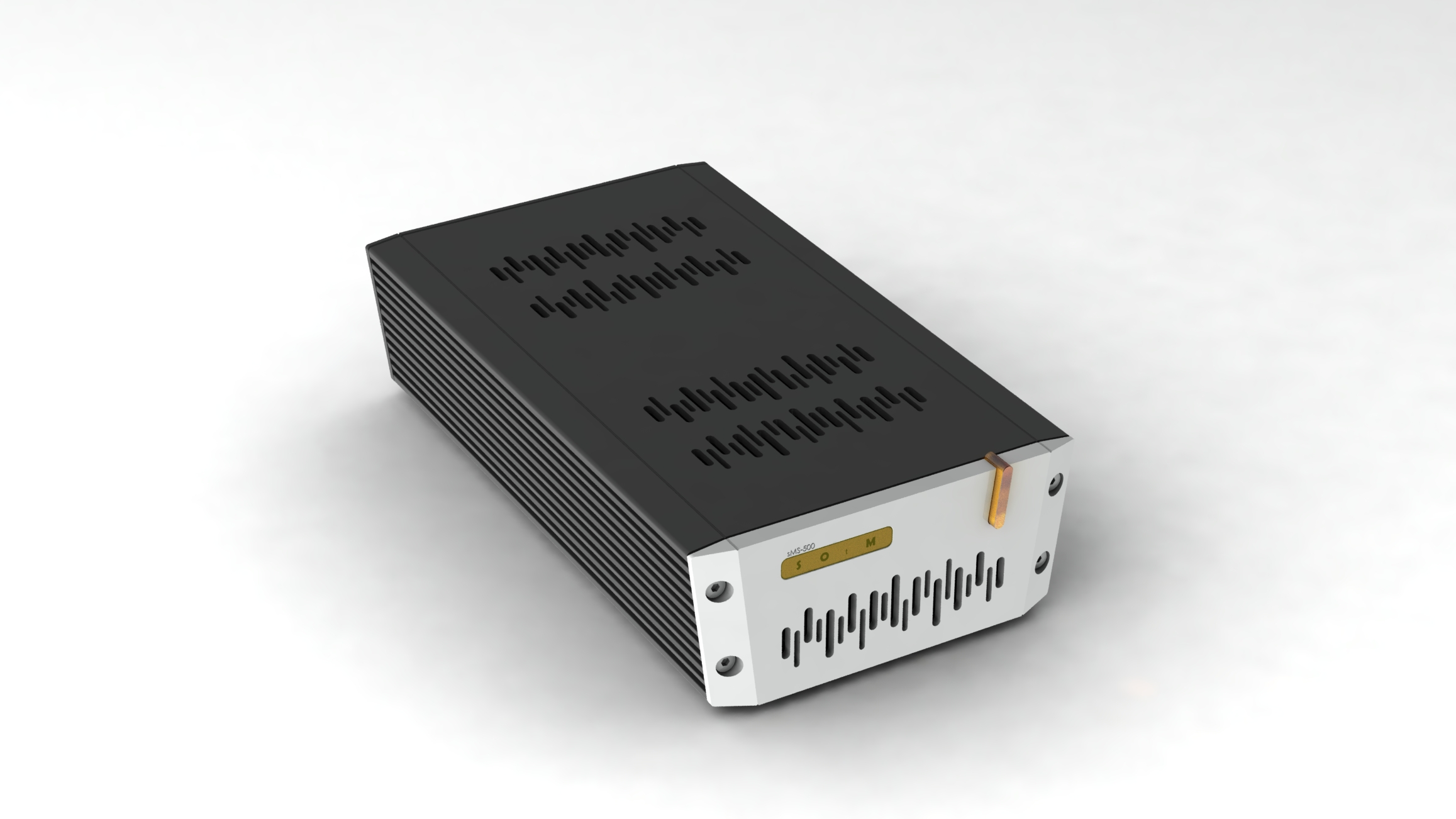
The Next Generation Begins
Technology exists to serve music.
A New Chapter in SOtM Network Audio
For more than a decade, the sMS-200 has earned the trust of music lovers around the world, becoming one of SOtM’s most recognized network audio products.
Throughout this journey, SOtM has remained focused on one fundamental question:
How can digital audio be delivered with greater purity and fidelity?
Rather than pursuing specifications for their own sake, we have always believed that technology should exist to preserve the integrity of music. This philosophy has driven years of research into ultra-low-noise and ultra-low-jitter technologies, shaping every product we create.
The sMS-500 carries this philosophy forward while introducing an entirely new hardware architecture developed for the next generation of network audio.
More than a performance upgrade, the sMS-500 establishes a new foundation designed to meet the evolving demands of modern digital audio while remaining true to SOtM’s uncompromising approach to musical reproduction.
Designed from the Ground Up
The sMS-500 has been completely redesigned from the motherboard upward.
Its new hardware architecture integrates every major element—including system design, power architecture, and processing platform—into a dedicated environment optimized exclusively for music playback.
Rather than maximizing computing performance, every engineering decision has been made to minimize electrical noise, improve signal integrity, and preserve timing accuracy throughout the entire playback chain.
The result is not simply a faster system, but one capable of reproducing music with greater transparency, naturalness, and emotional realism.
This newly developed hardware architecture will also serve as the foundation for the next generation of SOtM network audio products.
The Evolution of Eunhasu
The sMS-500 continues to use SOtM’s proven Eunhasu operating system, now specifically optimized for its new hardware architecture.
While maintaining the intuitive user experience familiar to existing SOtM users, the software has been refined to fully realize the capabilities of the new hardware platform.
Improved responsiveness, enhanced stability, and ongoing software development ensure that the sMS-500 is prepared not only for today’s listening environments, but also for the future of network audio.
Support for Roon Ready, DLNA/UPnP, MPD, Squeezelite, HQPlayer NAA, and other network audio environments allows seamless integration into a wide range of high-end audio systems.
Engineered for Music
At SOtM, technology has never been the destination. It has always been the means. Reducing electrical noise. Improving timing accuracy. Preserving every subtle nuance contained within the original recording. Every engineering decision is guided by a single purpose: To bring listeners closer to the music.
That philosophy continues in every aspect of the sMS-500.
The Beginning of a New Generation
The sMS-500 is more than the successor to the sMS-200.
It marks the beginning of a new generation of SOtM network audio products.
Built upon an entirely new hardware architecture while carrying forward the philosophy that has defined SOtM for years, the sMS-500 represents the next step in our pursuit of musical excellence.
The Next Generation Begins.
Get a 60days free trial Roon license!
Plus, get a 1 year Roon license at the very special price!

Key Feature
- Roon Ready
- UPnP audio renderer, Open Home support
- Music Player Daemon (MPD)
- LMS & SqueezeLite
- Shairport-sync
- LibreSpot
- MinimServer
- BubbleUPnP Server
- Diretta Host & Target
- Qobuz Connect
- HQPlayer Embedded
- HQPlayer Network Audio Adapter (NAA)
- Automatic CD ripping (External USB CD drive required)
Review
Specification
OS
Linux (User-proven, high-end audio-grade Eunhasu OS)
Software Features
Roon Ready
UPnP audio renderer, Open Home support
Music Player Daemon (MPD)
LMS & SqueezeLite
Shairport-sync
LibreSpot
MinimServer
BubbleUPnP Server
Diretta Host & Target
Qobuz Connect
HQPlayer Embedded
HQPlayer Network Audio Adapter (NAA)
Automatic CD ripping (External USB CD drive required)
Processor Board
64-bit quad core ARM Cortex A53 CPU
High-performance multi-core ARM Mali-T720 GPU
Integrated hardware floating-point coprocessor
3GB LPDDR3 memory
Integrated 3D GPU
Integrated video decoder
Integrated image decoder
Integrated graphic engine
Integrated crypto engine
1 x High-end audio-grade USB 2.0 Type-A port (1.0A max current)
1 x USB 3.1 Gen 1 Type-A port (2.0A max current)
1 x USB 2.0 Type-A port (1.0A max current)
1 x HDMI 2.0a port (4K support, HDMI audio support)
1 x Gigabit Ethernet port
1 x microSD card slot for OS installation
• Not all processor board features are supported by Eunhasu OS.
Power Requirements
Input voltage: +7.0 to +15 VDC (Optional +5 V input)
Maximum power consumption: 30 W
5 A-rated 5.5mm OD, 2.1mm ID DC jack
Operating Environment
Operating Temperature: 0℃ to +30℃
Storage Temperature: 0℃ to +40℃
Operating/Storage Humidity: 10% ~ 90%
Dimensions
106 mm x 49.5 mm x 185.5 mm
Weight
1.5 kg >
FAQ
What makes the sMS-500 special?
The sMS-500 is more than just a music player. It is a high-end music server designed from the ground up to deliver digital audio with the highest possible signal integrity.
It combines a newly developed hardware platform, SOtM’s proprietary design expertise, and the proven Eunhasu OS, refined over many years, to provide stable support for a wide range of music playback applications and streaming services.
To maximize the sound quality of USB audio output, every aspect of the design—including the power supply, clock architecture, and signal path—has been carefully optimized. The result is a more natural, refined, and musically engaging listening experience.
Which products work best with the sMS-500?
While the sMS-500 delivers outstanding performance on its own, it can achieve an even higher level of sound quality when used with SOtM’s range of high-end audio components.
For example:
-
sPS-550 – Dedicated DC power supply for audio systems
-
cBL-USBm – High-performance USB audio cable
-
dCBL-CAT8M – Audio-grade Ethernet cable
-
sNH-10G – Audiophile network switch
-
sCLK-OCX10ultra – Master clock
When combined with these products, the overall system can benefit from reduced electrical noise, improved signal integrity, and a more natural, detailed, and musically engaging sound.
You can also upgrade your system step by step by adding the components that best suit your listening environment and system configuration.
Please follow the recommendations below when using an external USB storage device with the sMS-500. Use a USB storage device with a single partition. Multi-partition storage devices may not mount correctly. We recommend using an externally powered USB hard drive for maximum stability. Storage devices with capacities of up to 2 TB are recommended for reliable operation. When connecting an external storage device, use only one standard USB port (excluding the dedicated Audio-Grade USB port). Using multiple USB ports simultaneously may degrade audio performance. Once connected, the external storage device can be used with Squeezelite, MPD/DLNA, or MinimServer. For more detailed information about using external storage devices and Eunhasu OS, please refer to the documentation below. https://docs.sotm-audio.com/doku.php?id=en:eunhasu:startwhen connecting an external storage device to the sMS-500?
Please follow the recommendations below when using an external USB storage device with the sMS-500.
-
Use a USB storage device with a single partition. Multi-partition storage devices may not mount correctly.
-
We recommend using an externally powered USB hard drive for maximum stability. Storage devices with capacities of up to 2 TB are recommended for reliable operation.
-
When connecting an external storage device, use only one standard USB port (excluding the dedicated Audio-Grade USB port). Using multiple USB ports simultaneously may degrade audio performance.
-
Once connected, the external storage device can be used with Squeezelite, MPD, or MinimServer.
For more detailed information, please refer to the Eunhasu OS Documentation:
Does the sMS-500 support Wi-Fi?
Yes. The sMS-500 supports Wi-Fi connectivity.
Please note that a Wi-Fi connection generally provides lower performance and stability than a wired Ethernet connection. For the best audio streaming experience, we recommend using a wired Ethernet connection whenever possible.
To use Wi-Fi, you must connect a USB Wi-Fi adapter based on the Realtek RTL8812AU chipset.
For detailed setup instructions, please refer to the following guide:
How to Use Wi-Fi in Eunhasu OS
http://docs.sotm-audio.com/doku.php?id=en:how_to_use_wifi_in_eunhasu
Is an Internet connection required?
Yes. An active Internet connection is required for the sMS-500 to operate properly and to ensure normal system functionality.
Is a USB DAC required?
Yes.
The sMS-500 is a network music player that outputs digital audio via USB Audio.
To play music, it must be connected to a USB Audio-compatible DAC or an audio device equipped with a USB audio input.


